it
it de
de nl
nl en
en fr
fr
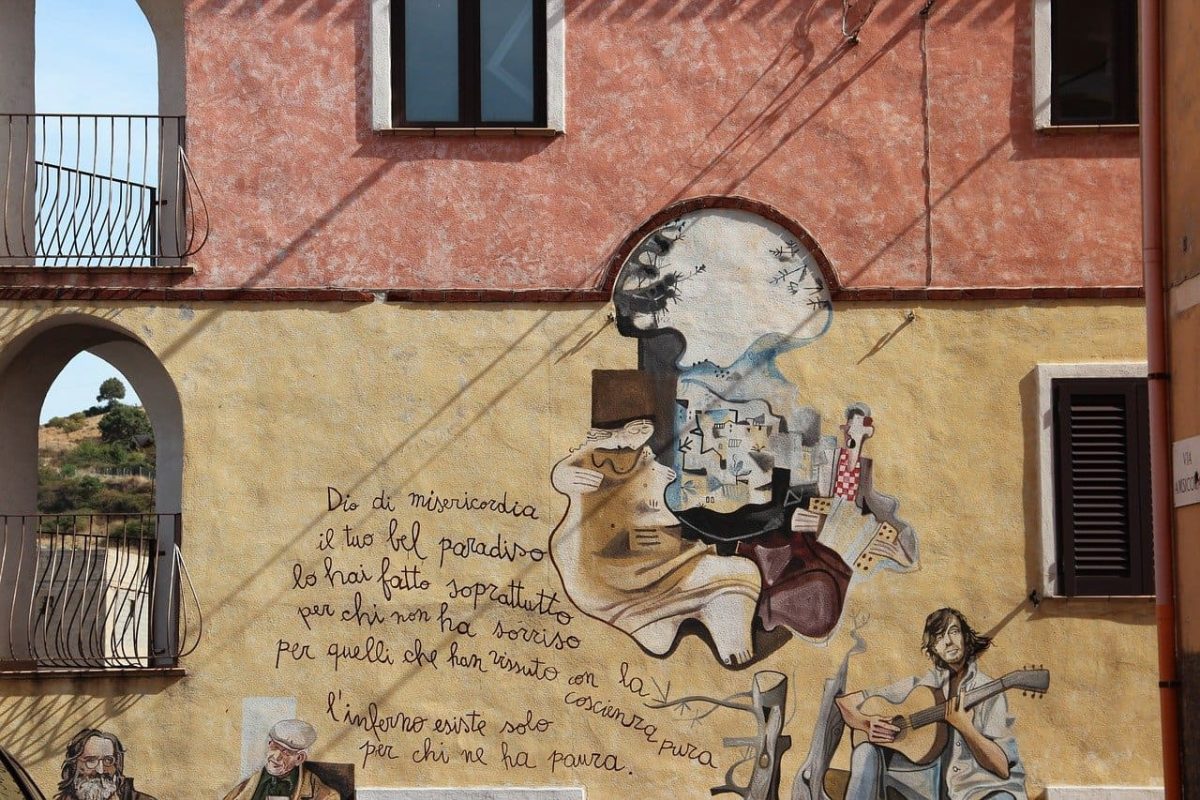
When we talk about the other side of Sardinia, our blog introductions often begin with the same thought: the popular Mediterranean holiday island is not only about turquoise waters, secluded coves, granite rocks and long sandy beaches, but also about so much more.
This time, we want to take you on a journey into the world of murals – the fascinating wall paintings found throughout Sardinia, particularly in the island’s small inland towns and villages. Discovering Sardinia’s street art can be the perfect reason to explore a different, yet equally unique, side of the island.
There are now almost 2,000 murals across Sardinia, telling powerful stories about the history and everyday lives of its people – about work and poverty, shepherds and farmers, migration and political conflicts, war and peace, and above all, about Sardinian identity.
When the Street Becomes a History Book
Especially during the 1960s and 1970s, murals in Sardinia became a way for local communities to express their views on social and political issues. House façades and walls along narrow village streets became communal canvases, featuring political themes as well as scenes from everyday life, work and Sardinian traditions.
Some villages are particularly rich in murals and offer fascinating opportunities to discover this unique form of art.
Orgosolo – The Most Famous and Political Murals
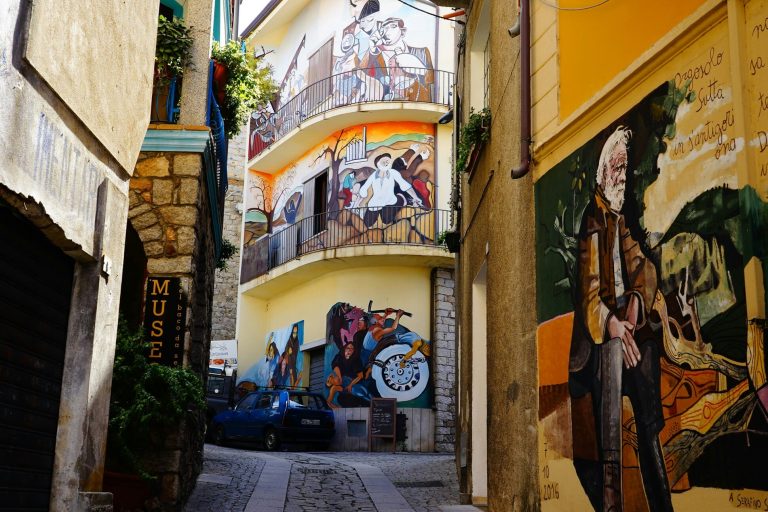
When talking about murals in Sardinia, Orgosolo is usually the first place that comes to mind. More than 150 murals shape the appearance of the village. Surrounded by rugged mountains and unspoilt nature, Orgosolo has around 4,000 inhabitants and lies in the eastern part of Sardinia, not far from the provincial capital of Nuoro.
The first cycle of murals appeared here in 1969, in connection with protests against the planned establishment of a military training ground in Pratobello.
A few years later, teacher Francesco Del Casino, originally from Siena, worked with his students in Orgosolo. Their initial focus was on the anti-fascist resistance and the memory of the Italian Liberation. Over time, numerous Sardinian and international artists joined the project. As a result, the murals gradually expanded beyond purely local themes and began addressing international events as well, including the attack on the World Trade Center.
San Sperate – The Starting Point of Sardinia’s Mural Tradition
Less well known, but equally important, is San Sperate, south of Cagliari. It was here that the art of mural painting emerged somewhat earlier.
The driving force behind this development was Pinuccio Sciola, a sculptor who returned to his birthplace in 1968 with the idea of transforming the entire village through art. San Sperate subsequently became a “Paese-Museo” – a village museum, with more than 200 murals spread throughout the town.
While the murals of Orgosolo tend to have a stronger political character, those in San Sperate focus more on community, everyday life, art and the joy of living.
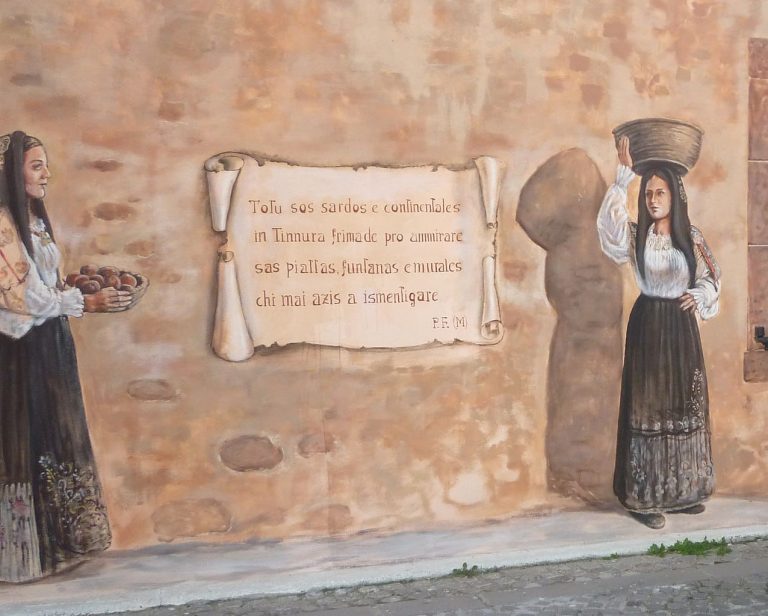
Tinnura – Small, Unusual and Highly Photogenic
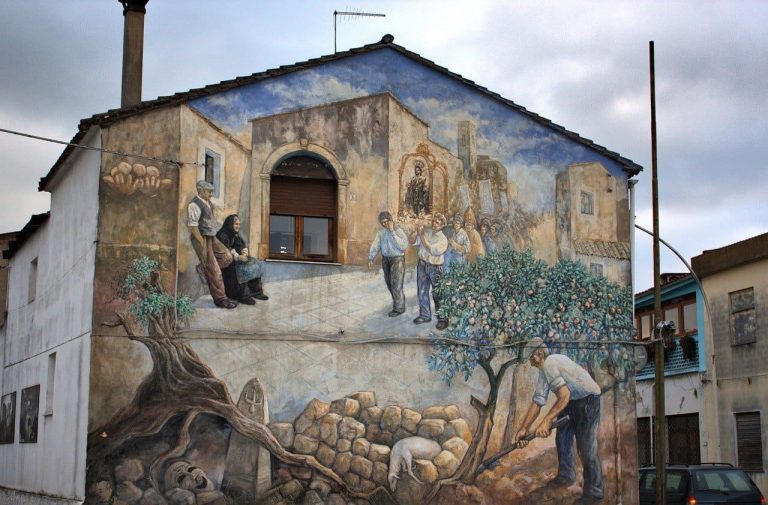
The small village of Tinnura, on the northern part of Sardinia’s west coast, around 2 km from Bosa, offers a very different experience.
When a village is threatened with decline, there are two options: surrender to the inevitable or reinvent itself. In 2001, Tinnura chose the latter, embarking on a policy aimed at enhancing, preserving and revitalising the historic centre.
Today, streets and façades throughout the village are decorated with numerous murals, focusing mainly on nature, Sardinian traditions, animals, agriculture and everyday life. Thanks to its small size, Tinnura is particularly remarkable for its extraordinary density of murals.
Villamar and Serramanna – History and Migration
Villamar, in southern Sardinia between Cagliari and Oristano, is another important centre of the island’s mural tradition.
Here, a special connection developed between Sardinian artists and Chilean exiles who had come to Europe following the military coup in Chile. This cultural exchange inspired a series of artistic projects, and Villamar’s walls were gradually transformed with scenes depicting history.
In 2016, street artist Manu Invisible was invited to create a new mural. His work, Bagliori (“Flashes”), portrays four major Sardinian cultural figures: Grazia Deledda, Nobel Prize-winning author; Andrea Parodi, an iconic Sardinian voice; Pinuccio Sciola, artist and visionary; and Antonello Salis, jazz musician and performer.
Serramanna, located in southern Sardinia just over 4 km north of San Sperate, also has an important place in the mural tradition. One of its best-known works is Emigrazione è deportazione (“Emigration is Deportation”), created in 1979. The mural addresses Sardinian emigration and the fact that many people were forced to leave the island in search of work and a better future.
The subject remains particularly significant for Sardinia, as migration continues to be an important part of the island’s modern history.
Other Sardinian Villages Known for Their Murals
The tradition is by no means limited to a handful of places. Murals can also be found in:
- Locer
- Mamoiada
- Fonni
- Oliena
- Borore
- Flussio
- Sennariolo
- Montresta
- Ozieri
- Selegas
- San Gavino Monreale
San Gavino Monreale is particularly interesting. Here, a younger generation of artists has reinterpreted old buildings, streets and squares through large-scale artworks. The village combines the traditional Sardinian mural movement with contemporary street art.
Since 2017, the cultural association Skizzo, together with local residents, has organised street-art projects, attracting visitors and offering guided tours and other tourism-related services.
In southern Sardinia, places such as Sant’Antioco have also developed artistic open-air routes.

What Makes Sardinian Murals So Special?
The murals do not show Sardinia as it appears on a typical holiday postcard. Instead, they portray Sardinia from the perspective of its inhabitants. They tell stories of pride and resistance, difficult times and a deep connection to one’s homeland.
They depict the lives of shepherds, the role of women, the importance of family, agricultural work and the transformation of Sardinian society.
Walking through Orgosolo, San Sperate or Tinnura, you therefore encounter much more than painted walls. You encounter an art form that emerged from everyday life and remains visible to everyone.
A mural can be an artwork, a historical document and a political statement all at once. Together, these works reveal a society continually reflecting on its own identity, traditions and the changes taking place in the modern world.
Discovering Sardinia’s Murals – With Time and an Open Mind
Anyone who wants to experience Sardinia away from the classic tourist routes should consider including some of its mural villages in their itinerary.
The best way to discover them is on foot: walk through the villages, take your time and stop to look closely at the individual works. In Orgosolo, in particular, a guided tour can be especially worthwhile, as many of the murals tell specific stories and refer to historical events, individuals or political movements.
If you don’t have much time but would still like to experience Sardinia’s murals, we recommend these three places:
- Orgosolo, in the northeast, is the place to go for anyone interested in history, politics and Sardinian identity.
- San Sperate, in the south, is fascinating for its concept of transforming an entire village into a work of art.
- Tinnura, on the west coast, impresses with its remarkable concentration of murals and its charming depictions of everyday Sardinian life.
… And for Those Who Have More Time
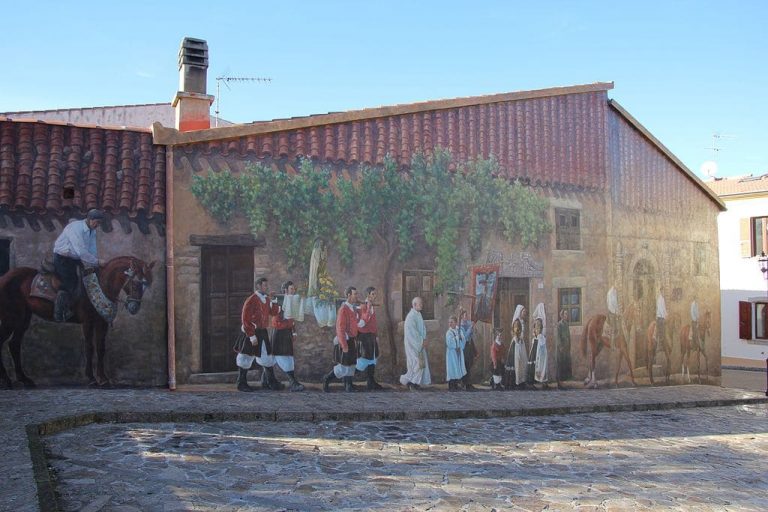
- Fonni, at the foot of the Gennargentu mountains: What many visitors don’t know is that the village is home to around 30 beautiful murals depicting everyday life, from local festivals to carnival masks. A map marks the murals along a recommended route and provides detailed information about each work.
- Onanì: Numerous sculptures and beautiful murals can be found throughout the village. One of the most significant works, which has sparked considerable discussion, stands in front of the town hall. Created by Diego Asproni, it tells stories of struggle, demands and social protest.
- Selegas: In 2018, the village hosted the Luigi Pu art prize in honour of the artist, who died in 2015 and had portrayed the village and its murals so impressively. One of the most striking works depicts an elderly woman turning her back on the Sardinian landscape, her face marked by deep lines of worry.
- Cossoine, in northwestern Sardinia, is known for murals depicting everyday life – from a man wearing the traditional Sardinian bonette headgear and playing a wind instrument to an elderly woman in traditional black clothing hanging out the laundry and looking across the village.
- In Palau, in the northeast, the narrative and descriptive aspects of the art take centre stage, combining realism with idealised representations.
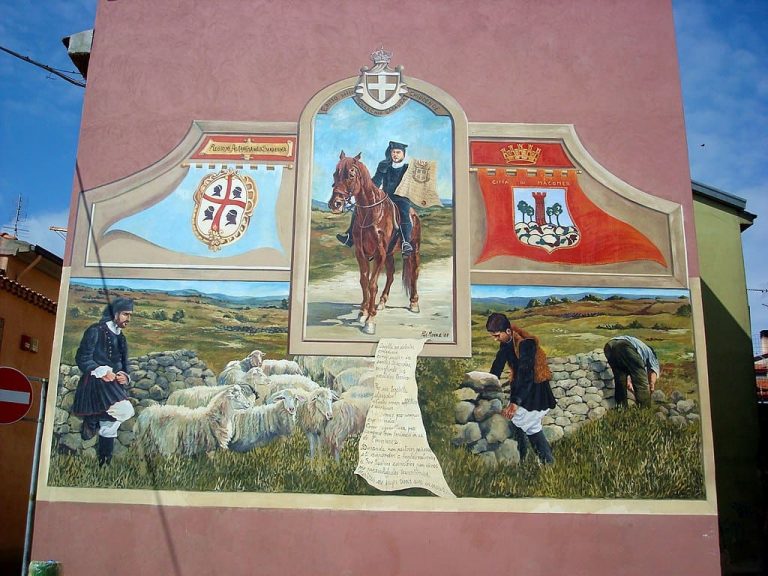
- Macomer has always been deeply shaped by its history and the events that took place here. Since 2016, a project has used murals and street art to revitalise public spaces, centred around the creative festival ProPositivo. Each year, the festival focuses on a different theme, attracting artists from around the world while also involving young people from Sardinian universities and schools. During the 2019 Resilience Festival, a mural was dedicated to Grazia Deledda. It features a black background, a colourful face and a quotation from the first female recipient of the Nobel Prize in Literature.
- Sadali is rich in street art, with murals depicting the traditional Sardinian game Sa Murra as well as portraits of men and women who have long since passed away but continue to live on in the memories of today’s residents. In 2015, Sadali hosted Murartista, an artistic initiative that brought international artists and their creative ideas to the small village. One of the most impressive works was created by ROA, a Belgian artist. His mural depicts a wild boar in a dark, distinctive style with strong, clearly defined lines.
- Montresta, located between Bosa and Alghero, can be considered an open-air museum of street art. Its works commemorate historical events, honour important figures and reflect the identity of the village. Montresta is also known for its traditional basket-making, which is itself represented and brought to life in the village’s murals.
Discover the Stories Behind Sardinia’s Walls
Would you like to discover Sardinia’s murals for yourself?
Get in touch with us. We would be happy to advise you personally and help you plan your trip around some of these fascinating villages and their stories.
SardiniaNatour
+39 070 2040391 (also via WhatsApp)
booking@sardinianatour.com
www.sardinianatour.com
Tell us about your ideas and wishes – and let us create your very own Sardinia Experience.
About the Author
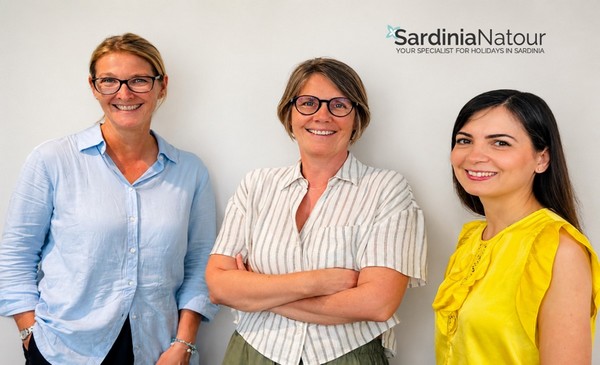
Our team consists of Katrin, Katja, and Claudia. Together, we run SardiniaNatour, an independent Sardinia Holiday Specialist based in Cagliari.
Since 2005, we’ve been helping travelers plan tailor-made trips to Sardinia. Our recommendations are based on years of experience, local expertise, and continuous on-site research. We prioritize authentic advice, sustainable tourism, and respect for people and nature.
With our blog, we aim to provide you with practical information, inspiration, and genuine insights into Sardinia—beyond guidebooks and standard tips.